Soap making can look complicated at first — with lots of tools, unfamiliar names, and endless “must-have” lists.
But the truth is… many of the things you need to start are probably already in your kitchen.You don’t need a professional studio or fancy equipment to begin. You just need the right tools, a simple recipe, good ingredients, a focus on safety, and the confidence to start small.
In this post, I’ll explain soap making equipment simply — what you actually need, why it matters, and what can wait.
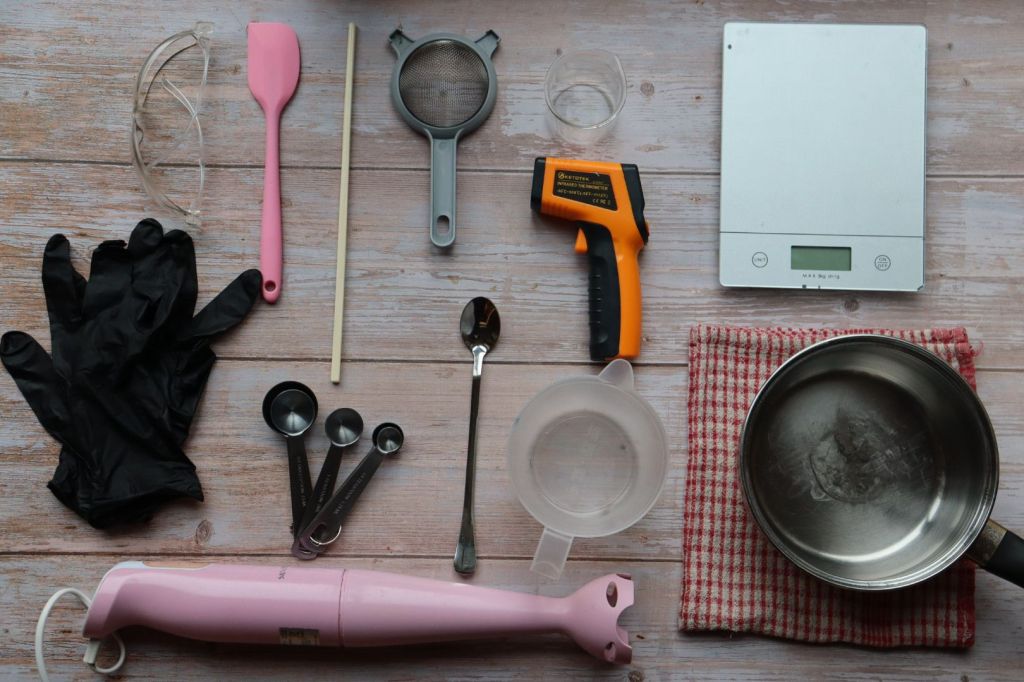
These are some tools you need to start :
Digital Scale: For precise measurement of oils, lye, and water.
Mixing Containers: Stainless steel pan, and heat-resistant plastic.
Stick Blender: To mix oils, lye solution, and create trace.
Measuring Spoons: For additives, like botanical essential oils, and colourants.
A little container to weight essential oils, is also helpful.
Digital Thermometer: To measure the temperature of both the oils and lye solution.
Silicone Spatulas: For stirring and scraping bowls.
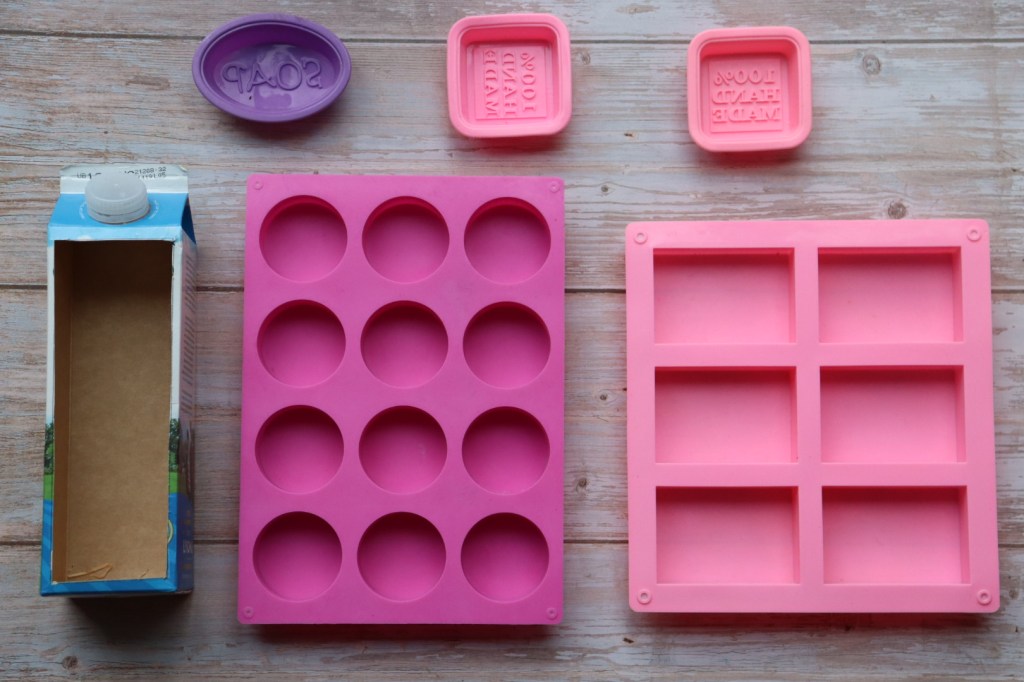
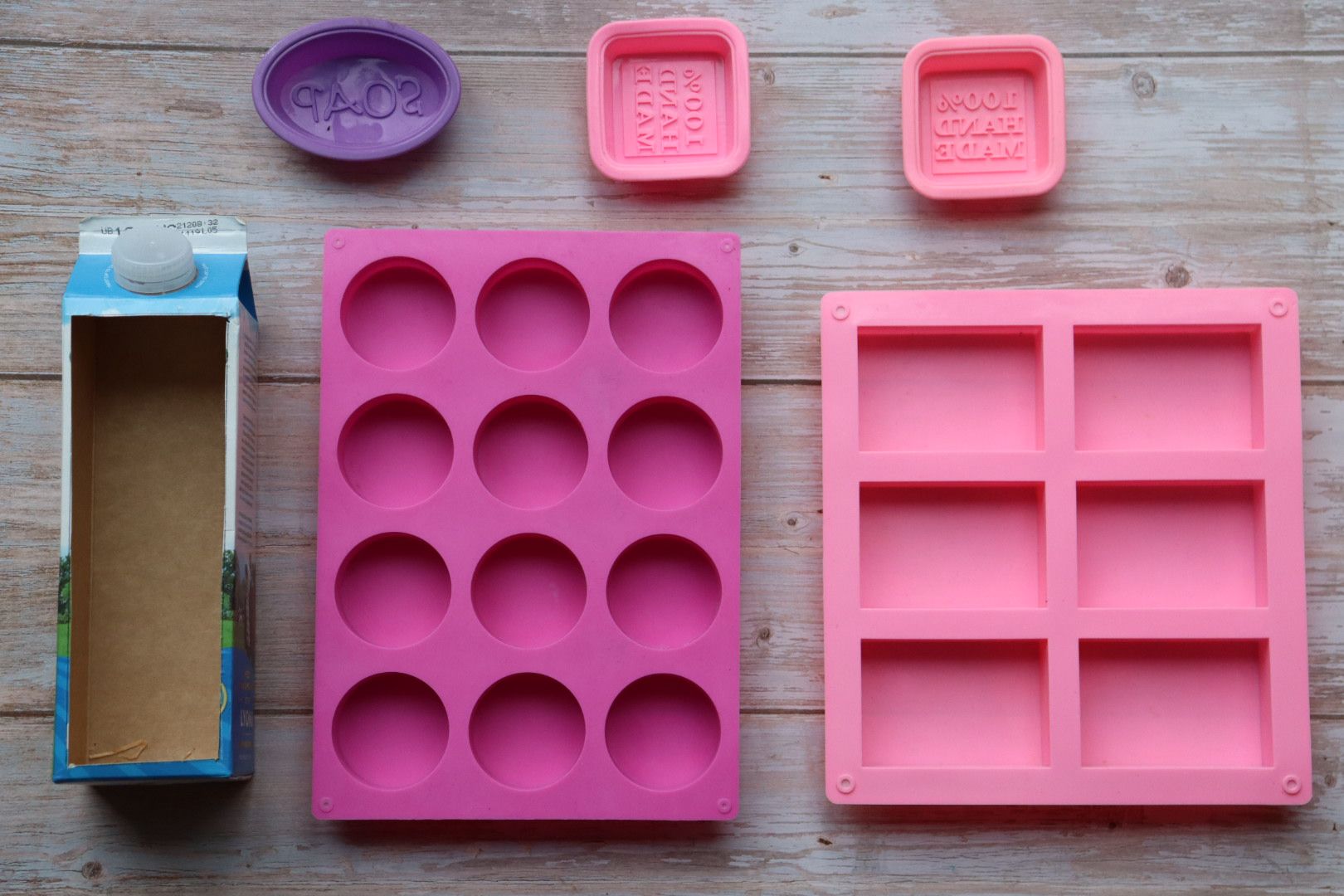
Soap Molds: Silicone or any other container that can be used as soap molds for shaping the soap, but if you don’t have I recommend a juice or milk cartoon does the job!
Stainless Steel Spoon: For stirring the lye.
Cutting Tools: After it hardens, cut the soap into bars using a knife or cheese cutter, I would avoid to invest in fancy cutters if you dont plan to make soap as a business, as these equipment can be expensive.
Towels or Blankets: To insulate the soap after pouring.
Chopstick: For creating texture on top of the soap once its made
Safety Equipment (Very important)
When you make soap from scratch, you are working with caustic soda (lye). It must be handled carefully. Always protect your hands and eyes.
1. Gloves: Protect your hands from lye and oils.
2. Goggles: To shield your eyes from lye splashes.
3. Long Sleeves: To avoid skin exposure to lye.
4. Face Mask: Optional if you’re concerned about inhaling fumes from lye. ( I recommend the face mask just when mixing the lye into the water.
5.Ventilation: Ensure good airflow in the workspace to prevent inhaling fumes, its good
Why it matters to have all of these ?
I always tell my students: have everything prepared before you start.
When all your tools and ingredients are ready and measured, you avoid mistakes and unnecessary stress during the process. Soap making requires focus, and rushing can lead to errors and therefore waste of ingredients.
Don’t rush the process .. start small
From experience, I can tell you there’s no need to rush.
Gather what you need.
Choose a simple recipe, that you find here, or from a trusted website or experienced soap maker or book.
Start small.
Sometimes your first batch won’t turn out perfectly. Sometimes you’ll need to try more than once. That’s part of the learning process.
If you’re really interested in soap making, keep going and trying — you will get there 🙂


 Home
Home 
Leave a comment