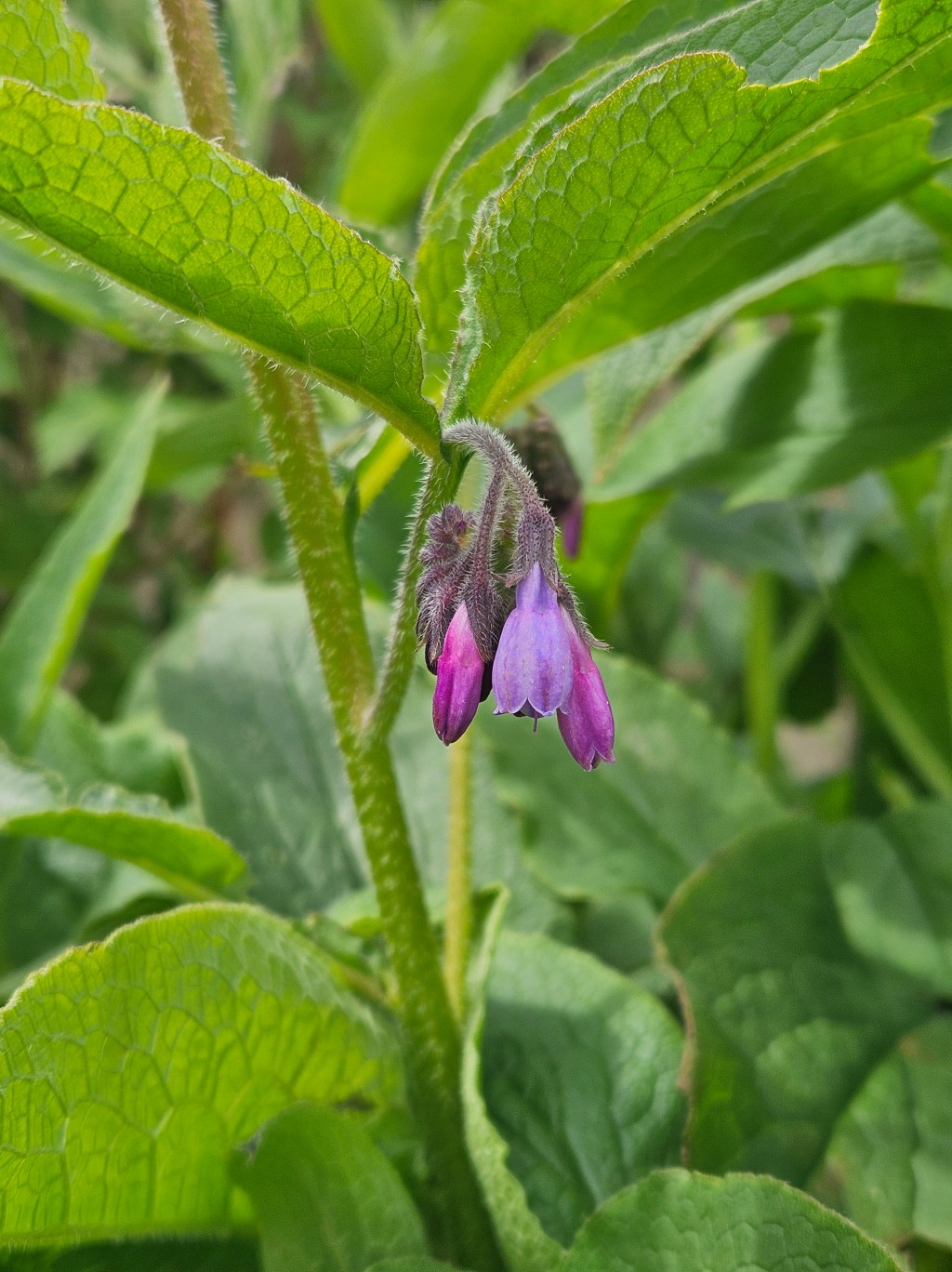
Comfrey is often called a “wonder plant,” and for good reason. It has a wide range of uses, from natural fertiliser and compost activator to traditional herbal skincare applications. Once established in the garden, it becomes a generous, low-maintenance plant that keeps giving year after year.
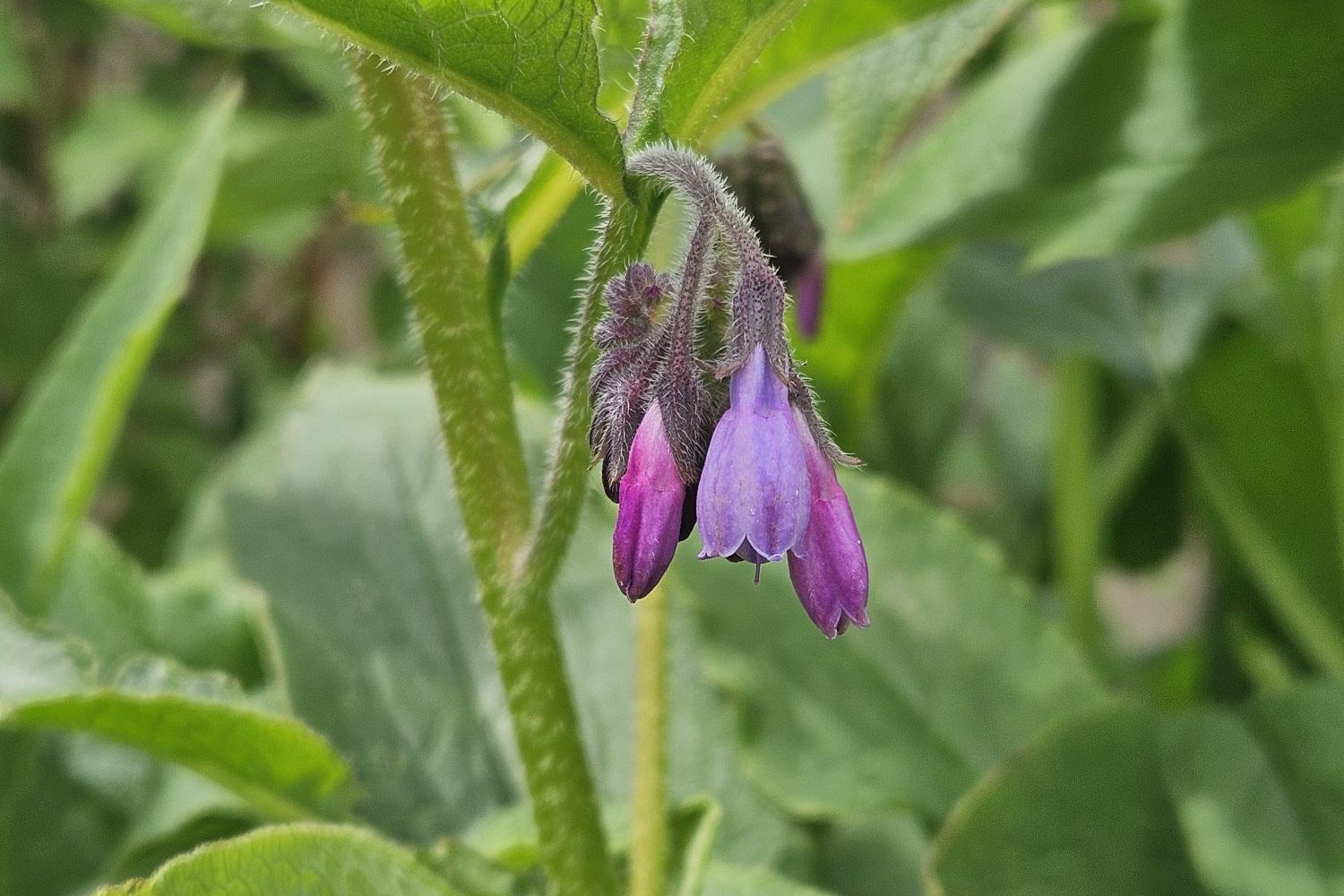
A Brief History of Comfrey
Comfrey (Symphytum officinale) is a traditional medicinal herb that has been used for centuries. It was cultivated by both the Greeks and Romans and has long held a place in herbal medicine traditions across Europe.
It belongs to the Boraginaceae family, which also includes plants such as borage.
Nutritional Value in the Garden
One of comfrey’s greatest strengths is its high nutrient content. It contains significant levels of the essential NPK nutrients:
- Nitrogen (N)
- Phosphorus (P)
- Potassium (K)
This makes it an excellent natural fertiliser, particularly beneficial for heavy-feeding crops such as potatoes and tomatoes.
Making Comfrey Liquid Feed
Comfrey can easily be turned into a powerful liquid fertiliser at home.
To make it:
- Fill a large container or barrel about a quarter full with comfrey leaves
- Add a weight on top to compress the leaves
- Leave to break down for 3–4 weeks
- Collect the dark liquid that forms at the bottom
If using a container with a small drainage hole, the liquid can be collected gradually as it ferments.
A word of warning: the smell during fermentation can be very strong, but the result is highly effective for feeding plants.
A Simpler Way to Use Comfrey (Time-Saving Method)
While liquid feed is very effective, it does take time to prepare.
What I do for time reasons is simply add the comfrey leaves straight into my compost heap. It’s a simple method, but still very effective,the leaves break down and feed the compost with valuable nutrients without any extra steps.
Growing Comfrey in the Garden
Comfrey is a hardy and adaptable plant. It thrives in full sun to partial shade and can even tolerate shadier areas. However, it prefers rich, moist soil and does not perform well in thin, chalky ground.
Because it develops a deep root system, it benefits from well-prepared soil where the subsoil has been loosened. Adding organic matter or compost will help it establish strongly.
It is also an excellent nutrient accumulator, drawing minerals from deep within the soil.
The most commonly recommended variety for gardeners is Bocking 14, a sterile hybrid known for its productivity and usefulness in composting systems.
Propagation and Care
Comfrey is usually propagated from root cuttings, which can be taken from the crown or lower sections of the plant. These cuttings are highly reliable and typically establish quickly.
For best results:
- Start cuttings in shaded pots
- Plant out once shoots begin to appear
- Handle with gloves, as the leaf hairs can sometimes irritate skin
In spring, comfrey grows vigorously after winter dormancy, making it an ideal time for propagation and division.
Traditional Skincare Uses
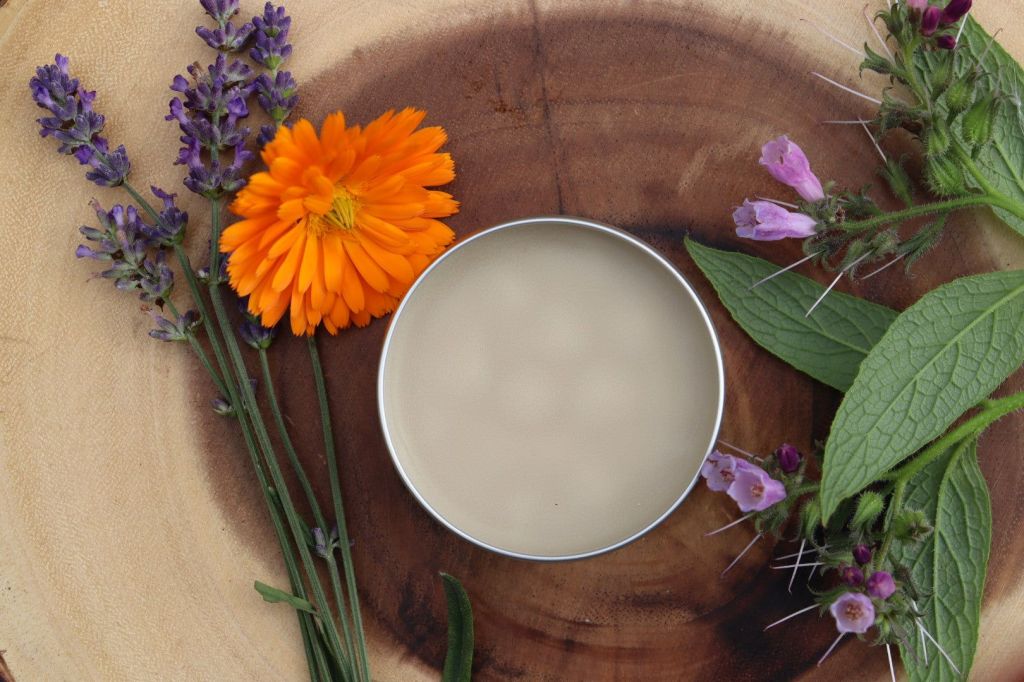
Comfrey has a long history of use in traditional herbal skincare. It has been included in balms and infused oils, often combined with ingredients like beeswax and plant oils, to help support and nourish dry skin.
I also love using comfrey in my own skincare work. I don’t make the oil myself, but I source it from a trusted local supplier.
It is one of the key ingredients in my handmade Lavender Foot Balm, where it helps to soothe and nourish dry, tired feet alongside calming lavender and deeply moisturising plant oils. This balm was created quite simply from real life, because in the garden, we spend a lot of time on our feet, and I wanted something that genuinely supports that daily wear.
You can view it here:
Lavender Foot Balm
Final Thoughts
If you have comfrey growing in your garden, it is well worth making full use of it. From enriching your soil to supporting traditional herbal remedies, it is one of the most versatile plants you can grow.
Source: Aeron Vale Allotment Society (Gwilym)


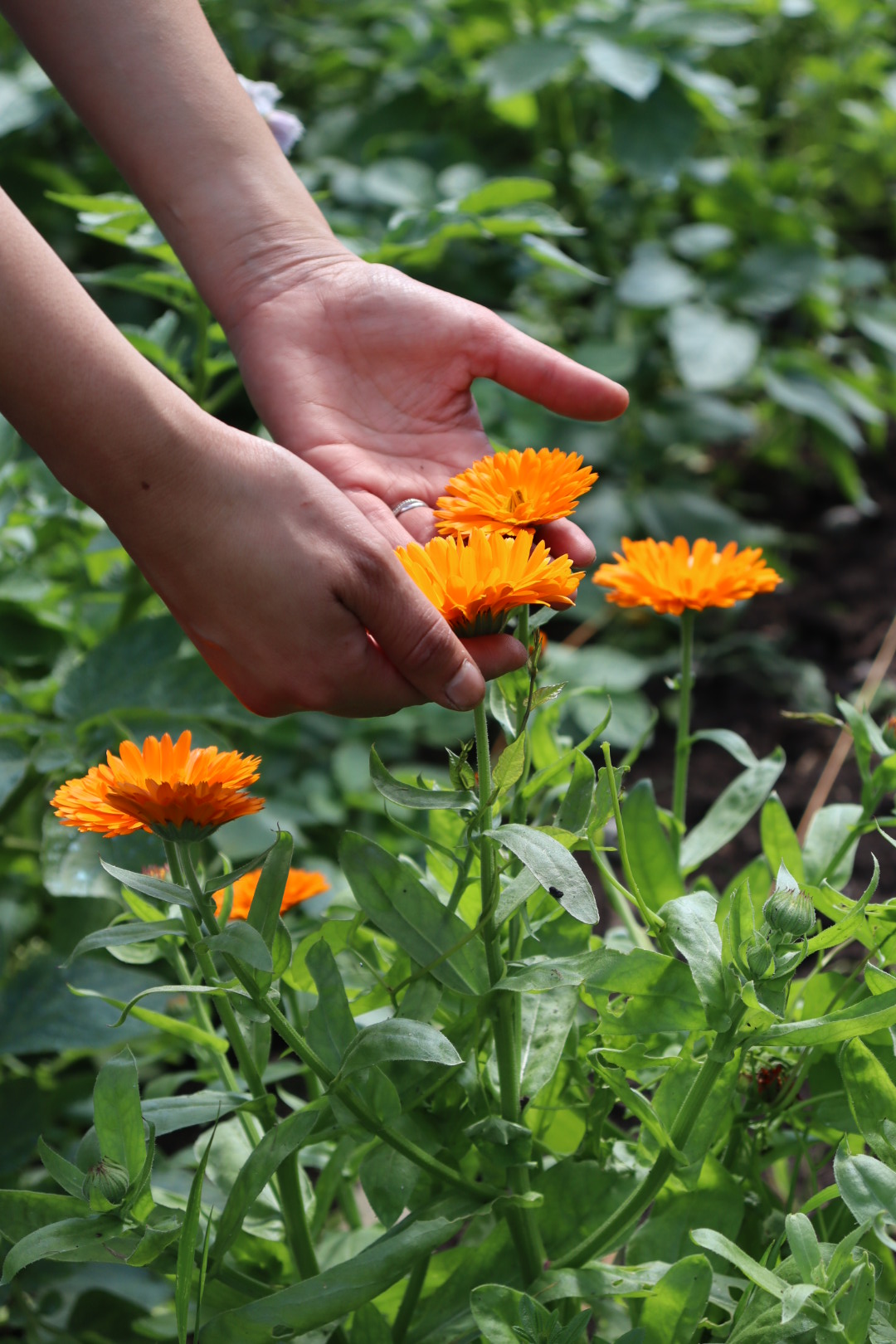
 Pot Marigold. Garden
Leave a comment